
Climate Change in the County
Climate change is a growing concern that affects communities everywhere, including the County of Brant. This page outlines how our region is experiencing climate impacts and what steps we’re taking to build a more resilient and sustainable future.
What is climate change?
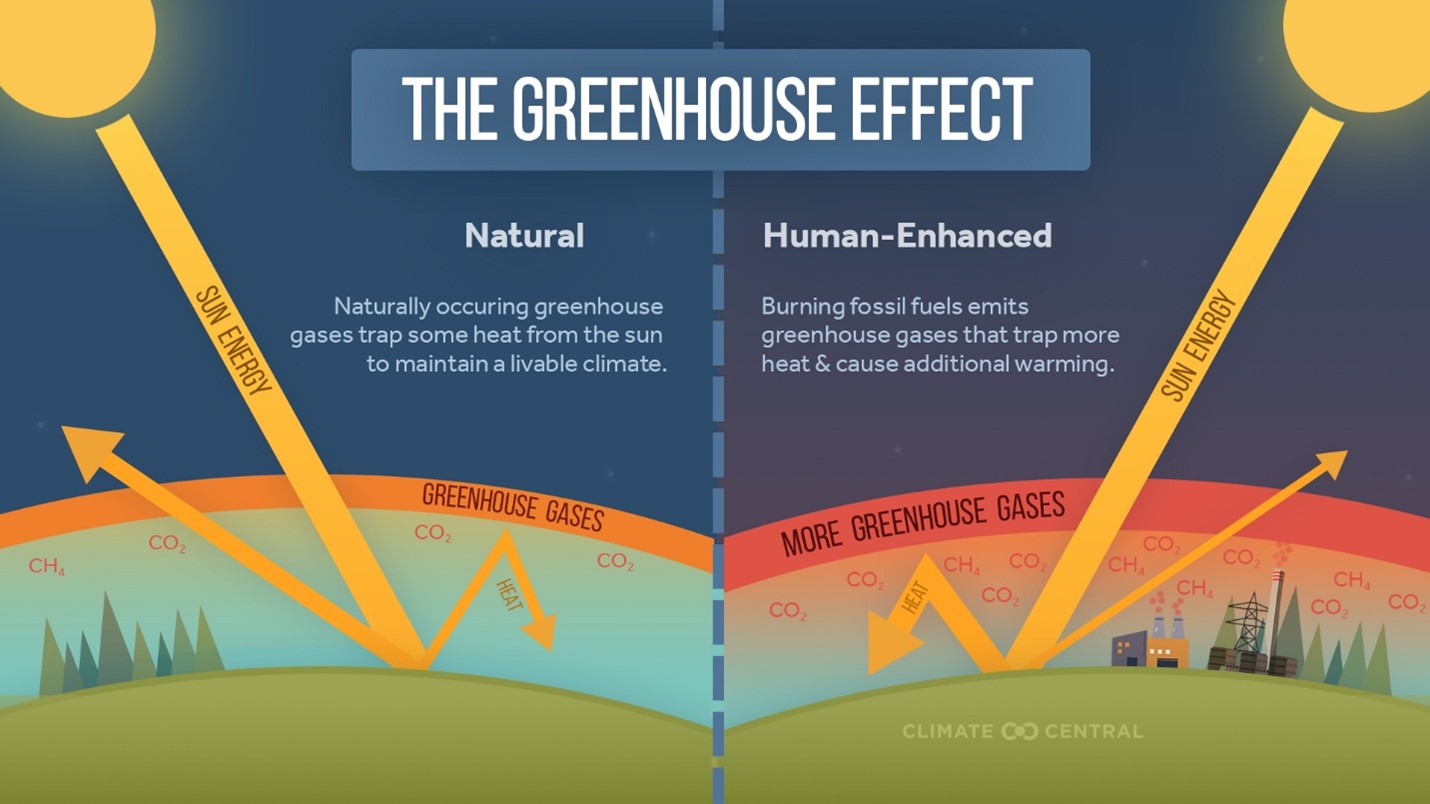
Climate change refers to long-term shifts in temperatures and weather patterns. These shifts can be natural, caused by events like changes in the sun’s activity or large volcanic eruptions. But since, the 1800s, human activities have been the main driver of climate change, primarily due to the burning of fossil fuels like coal, oil, and gas.
The burning of fossil fuels releases greenhouse gas (GHG) emissions that act like a blanket wrapped around the Earth, trapping the sun’s heat and raising temperatures. As a result, the extra heat is contributing to more frequent and intense weather events such as extreme thunderstorms, heatwaves, droughts, and floods.
The main GHGs that are causing climate change include carbon dioxide and methane. These come from using gasoline for driving a car or using oil or natural gas for heating your home. Agriculture, waste and landfills, and oil and gas operations are major sources of methane emissions.
We are already experiencing climate change in the County, such as:
- Hotter days and nights with more heat waves
- Warmer and more unpredictable weather across all seasons
- Stronger winds and more intense rainstorms
- More freezing rain and less snow
These changes affect our daily life in many ways:
- Increasing home insurance costs, energy bills, food prices, and taxes
- More damage to homes from storms and flooding
- More heat-related health problems
- Fewer changes to enjoy outdoor activities due to heat and extreme weather
- Greater risk of ticks and bug-related diseases (e.g. Lyme disease)
- And more
Mitigation vs. Adaptation
In order for us as a community to address the climate change problem, we all need to tackle the root cause of climate change by reducing GHG emissions to slow future warming as well as deal with the impacts that are already happening and cannot be prevented.
Mitigation
Climate change mitigation refers to the efforts to reduce or capture GHG emissions to slow the rate of climate change. The goal of mitigation is to limit future warming and prevent the worst-case scenarios. Examples of mitigation include switching to renewable energy, improving energy efficiency, and protecting forests to absorb more carbon dioxide.
Adaptation
Climate adaptation is adjusting to actual or expected future climate conditions to reduce harm and vulnerability. The goal of climate adaptation is to build resilience and cope with the impacts of climate change that are already occurring or are unavoidable. Examples of climate adaptation include building flood defenses, developing and using drought-resistant crops, and creating green spaces in cities to reduce heat.
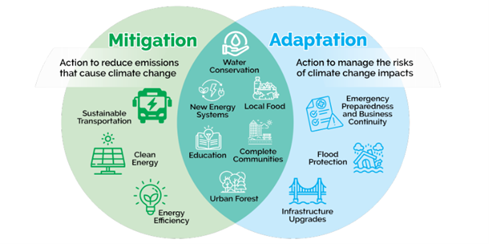
Neither strategy is sufficient on its own; mitigation alone won’t stop the damage from changes already happening, and adaptation alone won’t prevent future warming from becoming catastrophic.
Why take climate action?
Taking climate action can bring many benefits to the County of Brant and its residents, including:
- Reducing greenhouse gas emissions can improve air quality and public health
- Enhancing resiliency and preparedness for extreme weather events can protect infrastructure and reduce recovery costs
- Promoting sustainable agriculture can ensure food security and support local farmers
- Protecting natural resources and biodiversity can help maintain ecosystem services that are vital for clean water, fertile soil, and recreational opportunities.
Overall, climate action can lead to a healthier, more sustainable, and prosperous community.
Sign up for County of Brant News
Stay up to date on County of Brant activities, events, programs, and operations by subscribing to our news updates.