
Culverts are structures that carry water under roads, driveways, or similar areas. They help move water safely but cannot be used to run things like irrigation pipes under roads.
Stormwater Management System
Stormwater Management Funding Strategy: The Stormwater Management Funding Strategy project focuses on one key question - It is not if we fund stormwater management, but how we fund it. Learn more at EngageBrant.ca/StormwaterFunding
Stormwater is the rain or melted snow that runs off roofs, roads, driveways, and other surfaces. Instead of soaking into the ground, this water flows into storm drains and ditches, and can pick up dirt and pollution along the way.
What is Stormwater Management?
Stormwater Management (SWM) is the installation and application of infrastructure, naturally designed systems and ongoing operational programs to mitigate the impacts of stormwater to our communities and the natural environment.
County of Brant Stormwater Assets
In the County of Brant, our stormwater system includes:
- Over 1,200 km of ditches
- 180 km of storm sewers
- More than 5,400 structures (like catch basins, maintenance holes, and oil grit separators)
- 5,400+ culverts
- 910+ km of natural watercourses
- 29 stormwater management ponds
- 13 unassumed stormwater ponds
- 9 Low Impact Development (LID) facilities
- 250+ outlets
Total system value (2026): $259 million
Stormwater Management Activities
In the County of Brant, here’s how we take care of our stormwater system:
- Regular operation and maintenance
- Repairs to pipes, culverts, ditches, and storm structures (like maintenance holes and catch basins)
- Inspections, clean-outs, and maintenance of stormwater management (SWM) ponds
- Asset inspection and maintenance for pipes, structures, culverts, ditches, and oil grit separators
- Providing infrastructure locating services
- Keeping our digital database updated and organized
- Making sure we meet regulatory requirements through monitoring and reporting
- Completing Stormwater Servicing Area Studies
- Reviewing and updating our asset inventory
- Planning and carrying out infrastructure replacements and improvements
County of Brant Stormwater Systems
Stormwater systems are spread throughout the County of Brant, with the largest ones in Paris, St. George, and Cainsville. These systems include:
Storm sewers are pipes that carry rainwater and melting snow away from streets and buildings, sending it to stormwater ponds or nearby rivers and lakes.
Stormwater Service Connections
These connections link private properties to the County’s stormwater system. For most homes, these connections are only allowed in special cases and need County approval.
Stormwater ponds collect and hold extra rainwater to help prevent flooding. They are not meant for public use, so please keep children and pets away. These ponds have special inlets to bring in water during heavy rains and outlets that slowly release the water afterward.
Stormwater Management Ponds
The County of Brant maintains 29 stormwater management ponds in Burford, Oakland, Paris, Scotland, and St. George.
Our role in pond maintenance includes:
- Removing sediments that build up over time
- Clearing debris in and around the ponds
- Maintaining structures like gates and valves
- Caring for the surrounding plants and vegetation
- Replacing vegetation when needed
- Stabilizing pond banks to prevent erosion
- Regularly monitoring pond conditions
Why are stormwater ponds important?
- Ponds store excess rainfall during large storms to prevent flooding of basements and homes
- Ponds help to settle sediments and other contaminants
- The naturalized edges of the ponds create habitat for wildlife, birds and insects.
Why is the water in the stormwater pond poor quality?
- Fertilizer use results in excess nutrients causing smelly algal blooms and undesirable weed growth.
- Excess algae reduces the amount of dissolved oxygen in the water making it difficult for aquatic species to live. This also intensifies water odour.
- Bacteria from animal waste along with other contaminants are health hazards to humans and pets.
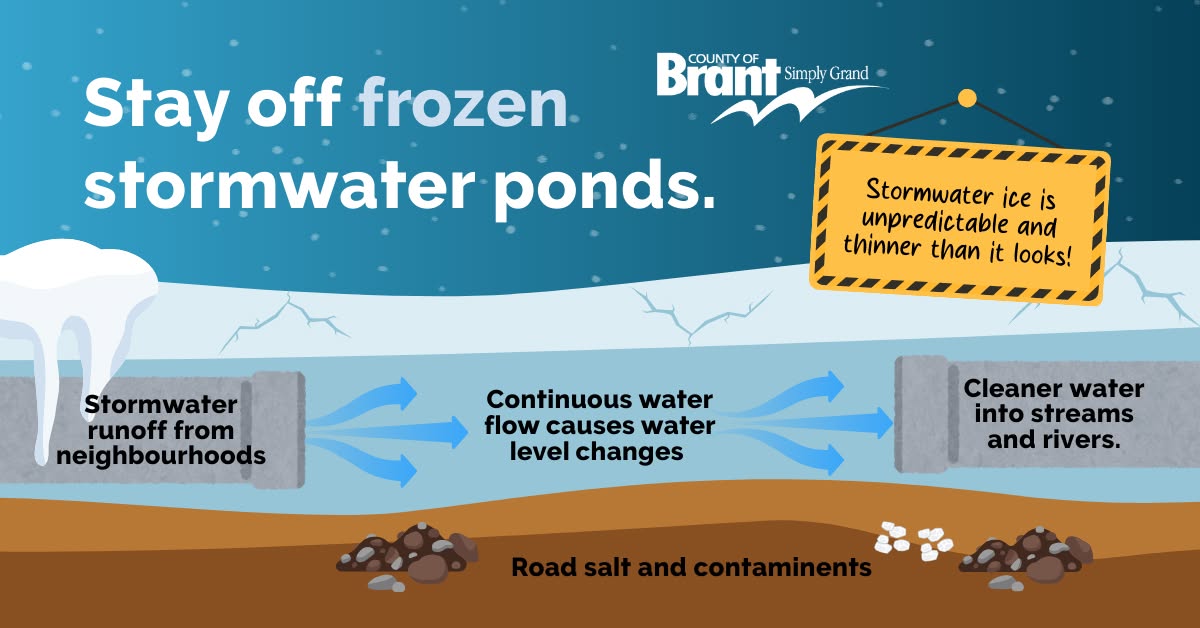
Why can't I skate or play on a frozen stormwater pond?
- The ponds collect runoff and because of the constant flow, they never fully freeze
- Fluctuating water levels can make the top layer of ice extremely unstable, as can salt from the roads
Stormwater Pond Safety
Stormwater management ponds are engineered infrastructure designed to prevent flooding and trap pollutants, not recreational areas. While they often look like natural, peaceful ponds, they are unpredictable and present hidden dangers.
Safety Tips:
- Keep children and pets away from the water's edge at all times.
- Always keep dogs on a leash near these areas.
- Never swim, wade, boat, fish, or skate on a stormwater pond.
- Obey all posted warning signs.
Reasons to be careful around stormwater management ponds:
Rapidly Changing Water Levels: During and after rainstorms or melting snow, water levels can change quickly, filling up these ponds incredibly fast.
Soft, Muddy Bottoms: The bottom of a stormwater pond is made of thick, heavy muck. If a person or pet steps into it, they can quickly sink or get stuck.
Underground Infrastructure: Stormwater ponds may contain hidden intake pipes, grates, and concrete structures.
Unstable Ice Conditions in Winter
The "Invisible" Ice Danger: Unlike natural lakes, stormwater ponds never freeze safely.
Constant Movement Below: Water continuously flows into and out of these ponds from underground pipes. This moving water, which often contains road salt, thins the ice from underneath.
Deceptive Appearance: A stormwater pond might look completely frozen over, but the ice thickness is highly inconsistent. It can give way instantly under the weight of a person or pet, leading to hypothermia or drowning.
Pollutants: These ponds collect all the runoff from roads, driveways, and lawns. The water may contain oil, gasoline, fertilizers, pesticides, animal waste, and heavy metals.
Harmful Bacteria and Algae: Due to the stagnant nature of the water and the high nutrient levels from fertilizers, these ponds are breeding grounds for harmful bacteria (like E. coli) and toxic blue-green algae, which can cause illness if swallowed by pets or humans.
Storm Sewer Use Bylaw
The County of Brant regulates the discharge of materials to municipal and private storm sewer systems. This is to protect water quality by preventing the discharge of harmful substances to municipal and private storm systems and ultimately to water bodies within the County.
Discharges that do not meet the requirements outlined in the Storm Sewer Use ByLaw (PDF) may have serious consequences for public health and safety, municipal infrastructure and the environment.
Stormwater Video Series
Discover how stormwater is managed in the County of Brant through our Stormwater Management Video Series. Learn how stormwater systems work, why they are important, and how they help protect our homes, roads, waterways and natural environment.
Sign up for County of Brant News
Stay up to date on County of Brant activities, events, programs, and operations by subscribing to our news updates.