
Oil and Gas Wells

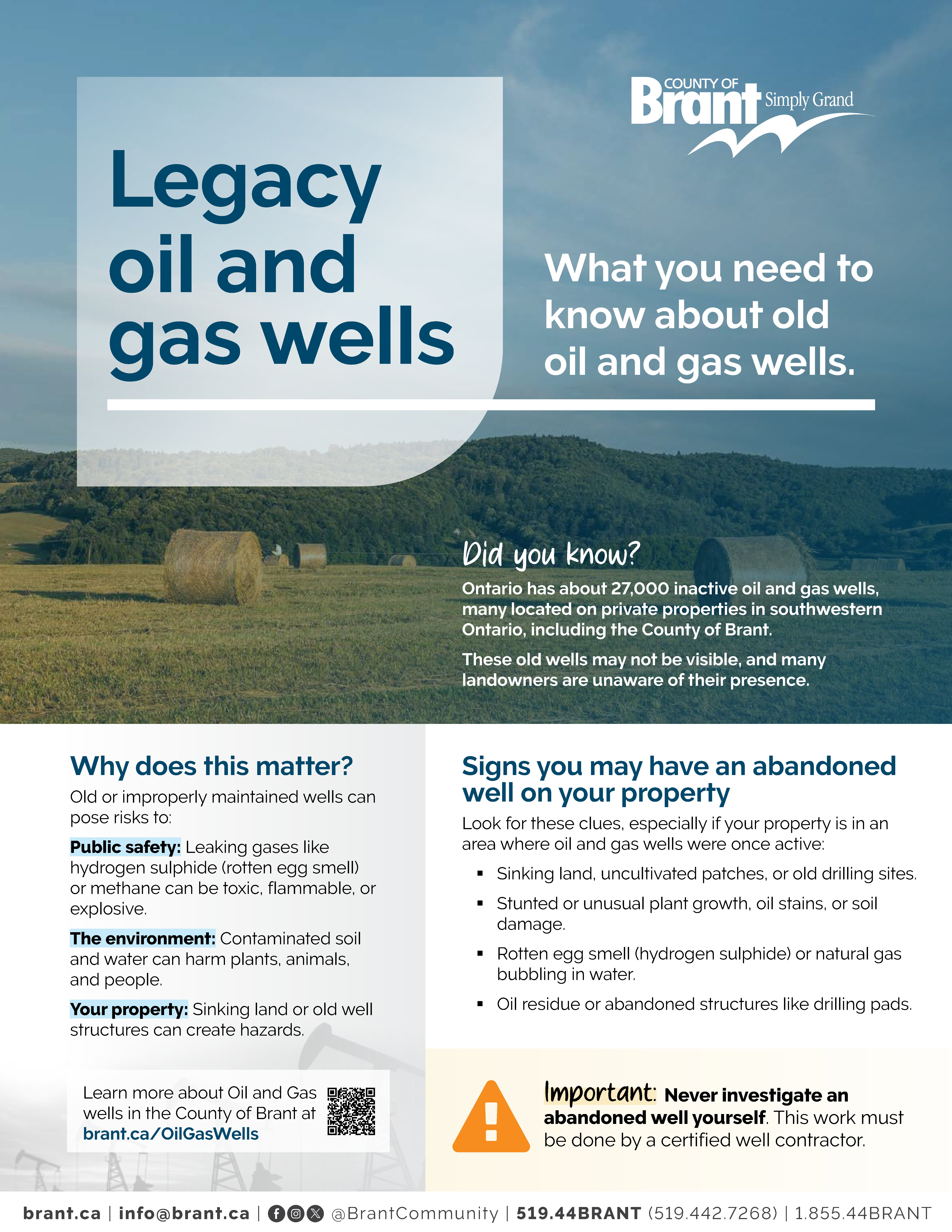
Across Ontario, there are approximately 27,000 inactive oil and gas wells. Many of these abandoned wells are located on private lands in southwestern Ontario, including numerous in Brant. These wells are often no longer in use and were abandoned without following today’s safety and environmental standards. Some may not be visible above ground, leaving landowners unaware of their presence. Improperly constructed, maintained or abandoned wells can pose risks to the environment and human health.

If you are unsure if there may be a gas or oil well located on your property, several mapping tools and resources can be found on the Ontario Abandoned Works Program website

Frequently Asked Questions

Inactive oil and gas wells can leak fluids and release chemicals which can contaminate soil or groundwater and may affect air quality. If a well is leaking, the ground may dip or sink over or around a well causing a tripping or collision hazard. 

Leaking wells may release hydrogen sulphide, a poisonous gas that smells like rotten eggs, and methane, an odourless and flammable gas. The health effects from breathing in these chemicals can vary depending on how much is in the air. Exposure to low levels may cause minor health effects, such as irritation of the eyes, nose and throat. Exposure to higher levels, particularly in confined spaces, may have more serious health effects and can be fatal.  

The long-term effects of living near old and abandoned gas wells are not well known, however studies are ongoing.  

If you suspect a gas well leak and experience symptoms, remove yourself from the area and seek medical attention.  

If you notice a rotten egg scent and suspect a hydrogen sulphide or methane gas leak: 

  • Near your home, call the Spills Action Centre of the Ministry of Environment at 416.325.3000 or 1-800-268-6060 (toll-free) 
  • In your home, call the fire department.

To determine if your property in the County of Brant has a gas or oil well, start by using online maps and resources:

  • Use the Petroleum Well Map to check if there is a record of a well on your property.
  • For more detailed records, use the Oil, Gas and Salt Resources Library Petroleum Well Map if you have an oil or gas well on your property.
  • Consult long-standing neighbours or local well drillers who may have knowledge of well locations. You can also walk your property systematically to look for signs of abandoned wells.

The following signs may indicate an abandoned well:

  • Farm properties with multiple farmsteads, abandoned structures, uncultivated areas, or sinking land.
  • Areas with stunted vegetation, compacted trails, oil residue, or abandoned drilling pads.
  • Patches of dead vegetation or soil staining.
  • A rotten egg smell caused by hydrogen sulfide.
  • Natural gas bubbling or oil odors in well water.

If you find a well on your property that is not listed in these databases, or if you are uncertain, contact the Ontario Ministry of Natural Resources' Petroleum Operations (Email: gasandoilwells@ontario.ca | Telephone: 519.873.4634).

  • Use the Petroleum Well Map to find out if there is a record of a well on your property 
  • The Abandoned Works Program is a program offered by the Ministry of Natural Resources, to help Ontarians properly plug wells on their property.   

Funding history

In 2023, the County of Brant received $105,000 in Provincial funding to enhance our response and promote awareness of the hazards posed by old and inactive oil and gas wells. The funding was used to purchase a drone with a laser sensor used for methane detection.

The County of Brant has received $105,000 in funding from the Government of Ontario to enhance their response and promote awareness of the hazards posed by old and inactive oil and gas wells. 

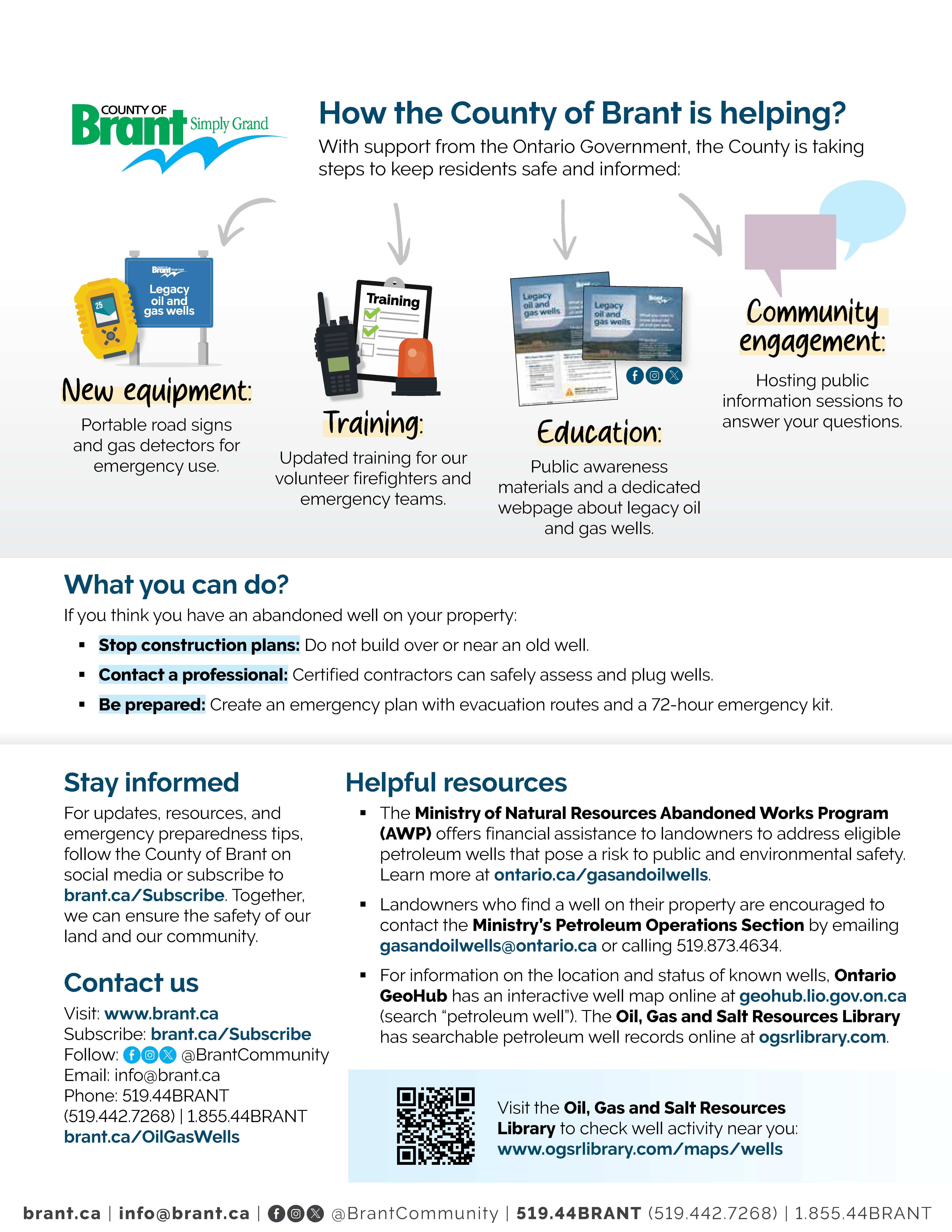
The County of Brant will use the funding to implement the following programs:

  • Purchase two portable digital road signs for public awareness messages and quick communication during emergencies, such as evacuations or road closures due to oil or gas well incidents.
  • Acquire handheld gas monitoring and calibration equipment to quickly detect dangerous gases. These detectors can be expanded for air monitoring in evacuation zones and will work with road signs to ensure resident safety.
  • Provide legacy gas well awareness and refresher training to the County's 200 volunteer firefighters, the newly contracted fire dispatch service, and the County's Municipal Emergency Control Group.
  • Develop public awareness materials and a webpage outlining the risks associated with legacy gas wells.
  • Host a public information meeting for the community.

Legacy oil and gas wells Public Information Meeting

Sign up for County of Brant News

Stay up to date on County of Brant activities, events, programs, and operations by subscribing to our news updates.